
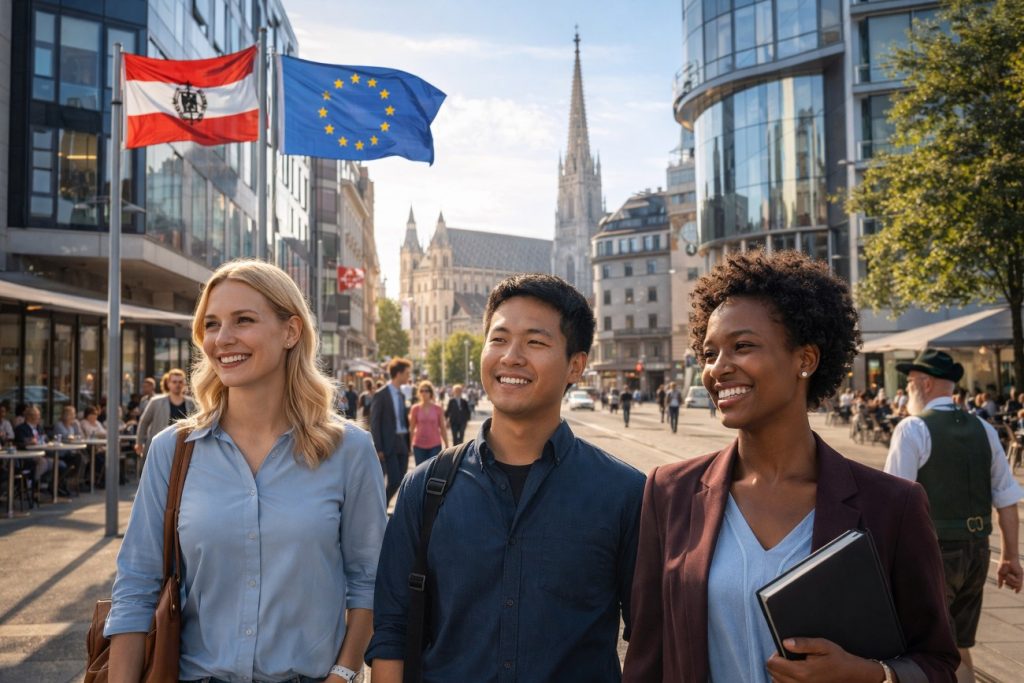
There is something slightly contradictory about Austria when it comes to talent. On the surface, it is one of the more attractive places in Europe to live and work. Cities like Vienna consistently rank highly for quality of life, infrastructure works as expected, and the pace of life feels manageable in a way that larger capitals often struggle to maintain. Organisations such as Statistics Austria continue to show steady inflows of international residents, particularly in urban areas. And yet, speak to people who have actually made the move, and a more nuanced picture emerges.
Living in Vienna as an expat, the appeal is obvious at first. The city is safe, clean, and structured. Public transport runs with a level of reliability that quickly becomes something you take for granted. There is a sense that systems are in place and, more importantly, that they are maintained. Compared to other European cities, where infrastructure can feel stretched or inconsistent, Vienna offers a kind of baseline stability that is difficult to replicate.
But talent attraction is not just about arrival; it is about integration and long-term retention. This is where Austria becomes more complex. While the country attracts skilled workers, particularly from across the EU, the process of settling into the system can be slower and more rigid than expected. Administrative processes, language requirements, and professional recognition frameworks introduce friction that is not always visible from the outside. Data and analysis from institutions like the OECD Migration programme regularly highlight how integration outcomes depend not just on access, but on how easily individuals can navigate local systems.
From a personal perspective, this is something you feel over time rather than immediately. The first months in Vienna tend to be smooth, even enjoyable. But as you begin to engage more deeply with institutions—whether that is registering a business, dealing with qualifications, or moving beyond basic employment—the complexity becomes more apparent. It is not chaotic, but it is structured in a way that assumes familiarity with the system.
At the same time, Austria benefits from something that is harder to quantify: consistency. Compared to larger, more competitive markets, the environment here is less volatile. For many professionals, particularly those not chasing rapid scale or high-risk opportunities, that stability is a significant advantage. It creates a different kind of value proposition, one that prioritises long-term quality of life over short-term acceleration.
The European context also matters. Free movement within the EU lowers barriers to entry, but it also increases competition between countries for the same pool of talent. Austria sits in an interesting position within that landscape. It is not as aggressively marketed as destinations like Berlin or Amsterdam, but it offers a level of predictability that those cities sometimes lack. The question is whether that is enough.
There are signs that policymakers are aware of this balance. Efforts to streamline processes and make Austria more accessible to international professionals are ongoing, supported by organisations such as the European Commission, which continues to push for greater labour mobility and recognition across member states. But as with many things in Austria, change tends to be gradual rather than disruptive.
From where I sit, the country’s competitive edge is real, but understated. Austria does not need to reinvent itself to attract talent. It already offers many of the conditions people are looking for. The challenge lies in reducing the friction that appears after arrival, when initial impressions give way to everyday reality.
That friction is not enough to outweigh the benefits, but it does shape how people experience the country over time. Austria is already good at attracting talent, the next step is ensuring that those who arrive find it just as easy to stay.