
When I first visited Vienna, one of the things that genuinely surprised me was how normal good public transport felt. Trams arrived when they said they would, buses were clean, and even in bad weather the system mostly just… worked. Over time, though, I’ve realised something else: Austria’s mobility story isn’t only being written in Vienna.
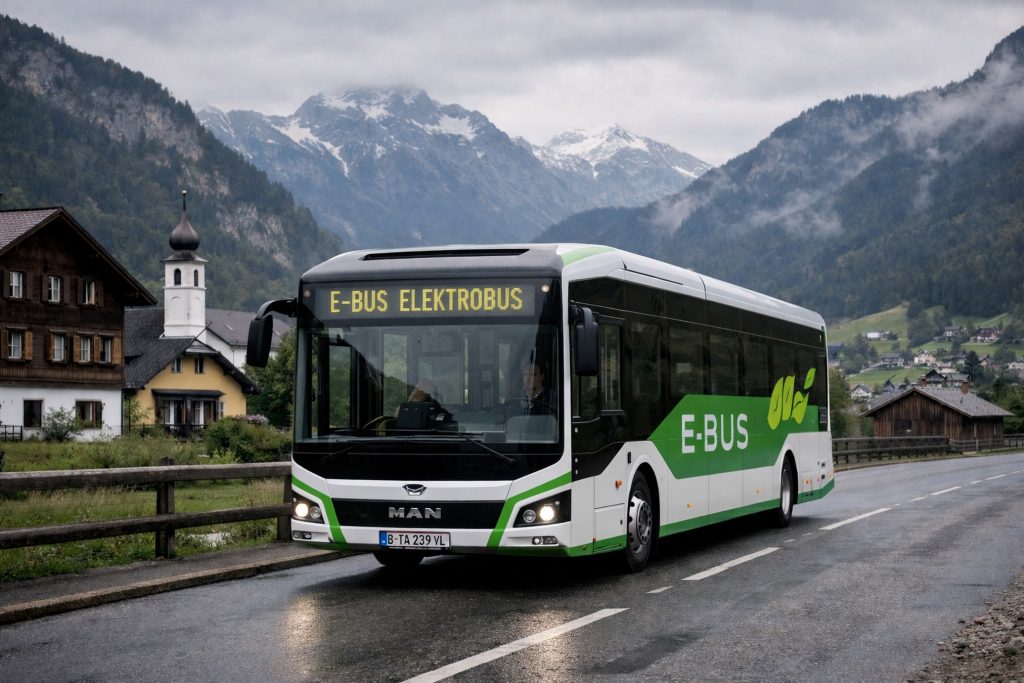
Seeing that Vorarlberg now operates the largest fleet of electric buses in the country feels like one of those quietly important developments that deserves more attention. Not because it’s flashy — electric buses rarely are — but because it shows how decarbonisation actually happens in practice: region by region, fleet by fleet, decision by decision.
From a Vienna perspective, it’s easy to assume that innovation naturally flows from the capital outward. But Vorarlberg has often done things differently. Smaller, more compact, and with strong cross-border ties to Switzerland and Germany, the region has long had to think carefully about efficiency and long-term planning. Electric buses fit neatly into that mindset. They reduce noise in dense town centres, cut local emissions, and make public transport more attractive — not as an abstract climate goal, but as a lived daily experience.
As an expat, I’ve noticed that Austrians tend to understate their successes. There’s no grand announcement, no sweeping claim of leadership. Yet in many European cities I visit, electric buses are still pilots, limited trials, or PR-driven showcases. In Vorarlberg, they are already becoming normal infrastructure. That distinction matters. Climate policy only really succeeds when it fades into the background and becomes routine.
Vienna, of course, has its own strengths: scale, density, and one of the most comprehensive public transport networks in Europe. But large systems move slowly. What Vorarlberg demonstrates is how smaller regions can move faster, de-risk technologies, and create real-world proof points that others can follow. In that sense, electric buses in Vorarlberg are not just a regional achievement — they are a testing ground for what wider rollout across Austria can realistically look like.
There is also a broader economic angle here. Fleet electrification is not just about transport policy; it touches energy infrastructure, grid stability, procurement, and long-term operating costs. Regions that gain early operational experience will be better positioned when EU regulations tighten further and when diesel finally becomes the exception rather than the norm.
Living in Vienna, I benefit daily from a system built decades ago with long-term thinking in mind. What Vorarlberg is doing now feels similar — investing early, quietly, and pragmatically. It’s a reminder that Austria’s climate transition isn’t driven by slogans, but by regions willing to treat sustainability as infrastructure, not ideology. And in the long run, that’s exactly what makes it credible.