
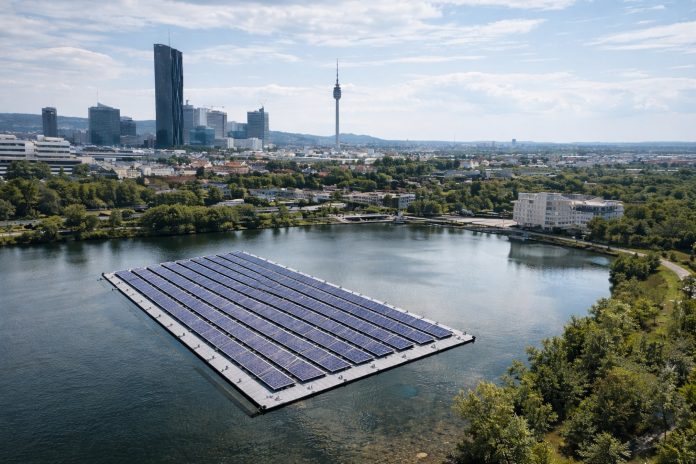
In a recent LinkedIn post published by the City of Vienna, it was noted that since 2023 Wien Energie has been operating a floating photovoltaic system capable of supplying electricity to around 1,000 households. The announcement, shared via the City of Vienna’s official LinkedIn channel, outlines how the project makes use of existing water surfaces to expand renewable generation within the city without competing for scarce urban land, framing it as a practical extension of Vienna’s long-term energy strategy rather than a standalone pilot project, as described in the original post on LinkedIn by the City of Vienna here.
Living in Vienna, developments like this feel entirely consistent with how the city approaches infrastructure. They arrive quietly, without dramatic announcements, and are presented less as breakthroughs than as sensible upgrades to systems that already function well. As an expat, that restraint has been one of the most noticeable cultural differences for me. Energy transitions elsewhere often come wrapped in rhetoric, but in Vienna they tend to appear as operational decisions made by institutions that expect to be around for decades.
Floating solar is a good example of that mindset. Vienna does not have the luxury of large unused spaces, and rooftop solar alone will never meet the city’s growing demand. Using water surfaces managed by municipal utilities is a pragmatic response to those constraints. It reflects the same logic that underpins much of Vienna’s public infrastructure, where optimisation and resilience are prioritised over speed or visibility. This is not about making energy visible in daily life, but about ensuring it remains dependable.
What stands out is how naturally this fits into the broader role of the city government and its utilities. Organisations like the City of Vienna and its energy arm operate with a level of public trust that allows incremental experimentation without constant political friction. For residents, the success of a project like this is measured less by press coverage and more by whether heating works in winter, prices remain predictable, and outages are rare. In that context, floating photovoltaics are not symbolic; they are functional.
Having lived in other European cities, the contrast is noticeable. In places such as Berlin or Barcelona, energy projects often become focal points for wider political debates. In Vienna, they are more likely to be absorbed quietly into the background. That does not mean ambition is lacking, but rather that ambition is expressed through execution rather than messaging. The fact that this solar installation has been operating since 2023 without much public fanfare says a lot about how sustainability is framed here.
From my own day-to-day experience, this approach feels reassuring. You sense that the city is preparing for a future shaped by higher energy costs and greater volatility, but doing so methodically and without placing the burden on individual behaviour. Vienna’s energy transition is largely invisible, and perhaps that is its greatest strength. It treats sustainability as infrastructure, not identity, and in doing so makes it far more likely to endure.

