
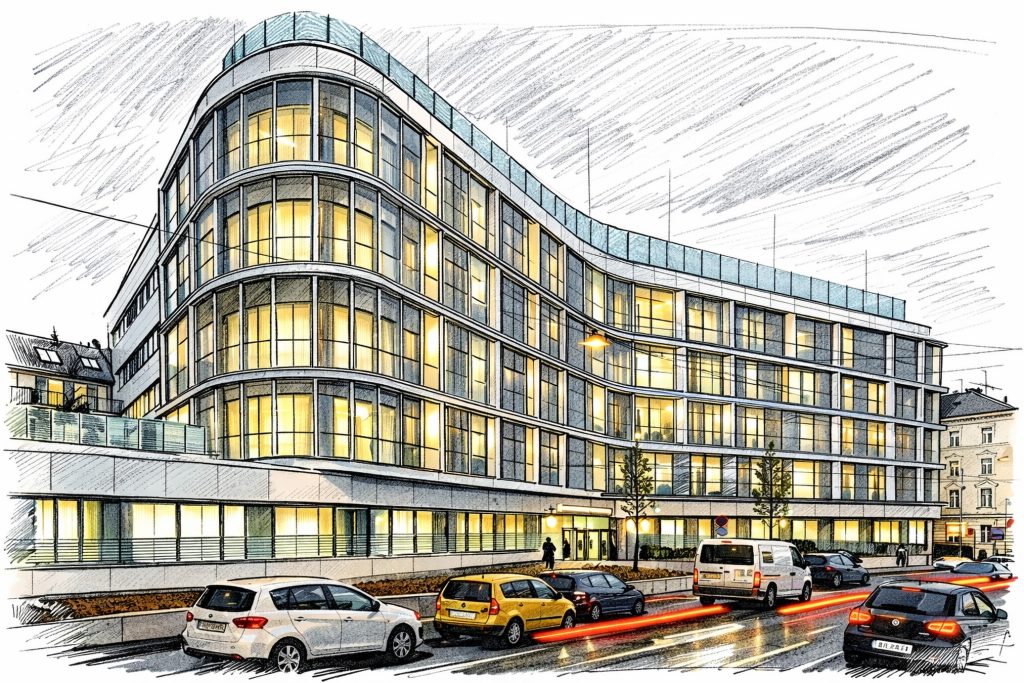
In a recent LinkedIn post published by the City of Vienna, it was announced that Klinik Landstraße will be expanded as part of ongoing efforts to modernise Vienna’s hospital infrastructure and prepare the healthcare system for future demand. The project is presented as a practical upgrade, focused on increasing capacity and improving facilities in line with current medical, operational, and sustainability standards.
Living in Vienna, announcements like this rarely feel like major events. Hospitals here tend to evolve quietly, and often you only notice the changes once they are already in place. As an expat, that gradualism stood out early on. Healthcare infrastructure is not framed as being in crisis, nor is it presented as something radically new. It is treated as something that requires constant, careful maintenance.
Klinik Landstraße, formerly known as Krankenhaus Rudolfstiftung, is deeply embedded in its surrounding neighbourhood in the third district. Walking past it, you would not immediately associate it with large-scale transformation. Yet that is characteristic of how Vienna handles infrastructure more broadly. Planning happens long before pressure becomes visible, and construction tends to be absorbed into everyday city life rather than disrupting it.
This expansion also reflects the wider structure of Vienna’s healthcare system, overseen by Stadt Wien, which operates one of Europe’s largest municipal hospital networks. Public ownership allows for long planning horizons and reduces the need for reactive decision-making. Rather than waiting for capacity shortages to become politically urgent, investment tends to happen incrementally and ahead of demand, particularly as the city continues to grow and age.
From a personal perspective, this approach creates a sense of reliability. You may not follow hospital projects closely, but you feel their impact indirectly through waiting times, service availability, and the absence of constant strain on the system. Compared with other European cities where hospital upgrades often follow periods of visible overload, Vienna’s method feels quietly conservative, but strategically resilient.
The expansion of Klinik Landstraße is therefore less about a single building project and more about reinforcing a long-standing model of public healthcare. It assumes continuity, demographic change, and long-term responsibility rather than crisis management. For someone living in Vienna day to day, developments like this rarely interrupt routines. They simply become part of the city’s steady renewal. Infrastructure here is not reinvented every decade; it is continuously adjusted, early enough that urgency rarely turns into panic.