
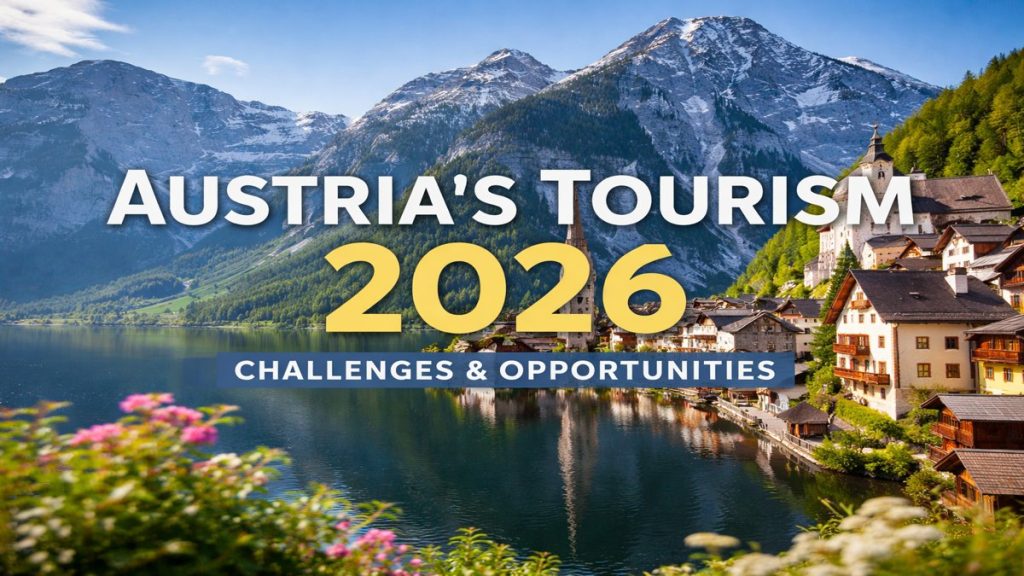
Austria stands at a pivotal inflection point in its tourism history. In early 2026, the federal government launched Vision T — a national roadmap to modernise the tourism sector and bolster competitiveness. With tourism contributing around 14% of GDP and supporting hundreds of thousands of jobs, this is not merely a policy refresh; it is economic infrastructure.
As we look toward Tourism 2026, Vision T must do more than polish Austria’s brand and streamline bureaucracy. It must confront three structural forces reshaping global travel: labour shortages, digital disruption, and sustainability as a business imperative.
Labour: A Sector Under Strain
Across Europe, hospitality is battling persistent workforce shortages. Industry analysis from the ITB Travel & Tourism Report 2025/26 shows that staffing gaps are now structural, not cyclical. From hotels to alpine resorts, demand outpaces supply.
Austria’s response — including the Team Tourism campaign and a national skilled-worker strategy highlighted in Krone — is directionally correct. But labour competition is continental. As The Guardian reports from Greece, booming visitor numbers are colliding with a shrinking workforce. Without coordinated reforms in wages, housing, seasonality, and training, Austria risks losing talent to sectors offering stability and progression.
Digital: The Hidden Competitor
Tourism is now a technology race. Travellers expect real-time pricing, personalised discovery and frictionless booking. Euromonitor’s “Top Five Trends Shaping Travel” underscores how AI, data and personalisation are becoming table stakes.
Vision T cannot treat digitalisation as a side project. Cutting red tape helps, but competitiveness in 2026 depends on whether Austria’s SMEs can plug into global distribution, leverage data for yield management, and offer modern guest journeys. Without this, the country’s natural advantages risk being overshadowed by digitally superior rivals.
Sustainability: From Value Signal to Market Gatekeeper
Sustainability has moved from marketing language to purchasing criterion. The EU’s Tourism Transition Pathway frames resilience, climate adaptation and skills as core to future competitiveness.
Austria is well placed. The long-standing Plan T and the upcoming STiAS 2026 summit position the country as a leader. However, sustainability must be systemic — embedded in workforce models, infrastructure investment, and destination management. Campaigns that redirect flows to lesser-known regions, such as Austria Tourism’s winter initiatives reported by Media Marketing, hint at what integrated policy can achieve.
Vision T’s Moment
Government statements reported by VOL.at show ambition: reduce friction, align marketing with global events, and unify the sector. Yet global tourism is rebounding fast. The winners in 2026 will be destinations that deliver:
- resilient, attractive careers,
- data-enabled enterprises, and
- authentically sustainable experiences.
Tourism is not a single industry — it is an ecosystem of people, places and platforms. Vision T provides a foundation. But Austria’s competitive edge will depend on whether it treats labour, digitalisation and sustainability not as “pillars,” but as a single operating system for modern tourism.
Key Takeaways for Tourism 2026
- Labour is structural, not cyclical – Europe-wide shortages demand reforms in pay, training, housing and seasonality.
- Digital capability is competitive advantage – SMEs need tools for data, distribution and personalisation to survive.
- Sustainability is now a market gatekeeper – Climate and community impact influence where travellers choose to go.
- Vision T must be systemic – Marketing and deregulation alone will not secure long-term competitiveness.
- Winners in 2026 will be destinations that integrate people, platforms and planet into one coherent strategy.
If you notice any inaccuracies in my writing, please get in touch with me. I will be happy to correct it.