
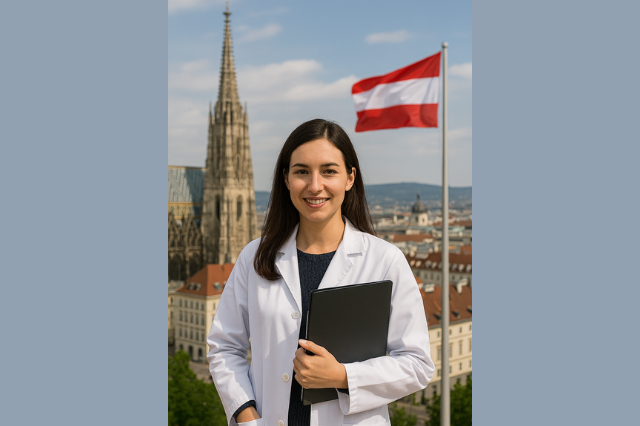
Reading the latest LinkedIn update from the University of Vienna made me reflect on how universities can truly reshape the landscape for women in science. The university’s E‑STEEM programme is a powerful example of an initiative that goes beyond good intentions or glossy descriptions—it genuinely provides women with the time, space, and stability they need to build a sustainable scientific career.
What I love about E‑STEEM is that it tackles a problem we all know exists but rarely see addressed with this level of commitment. Women in STEM fields still face structural barriers, particularly when it comes to securing long-term academic positions.
Every year, the University of Vienna highlights the work of female researchers on the International Day of Women and Girls in Science, showcasing their contributions and reminding us of their importance. Austria has nearly reached gender balance among doctoral graduates, which is a huge step forward.
When more women stay in science, the entire ecosystem becomes stronger. Research becomes more innovative, more diverse, and more reflective of the world it aims to understand. Vienna gains a richer scientific community. Austria gains a more competitive research landscape. And future students gain role models who show them that they belong in these fields, too.
Women in STEM in Vienna
A Snapshot Recent data from the University of Vienna offers a nuanced view of both progress and ongoing challenges. In the Faculty of Computer Science, women account for 27.8% of academics and 29.5% of students. In the Faculty of Mathematics, the contrast is even more striking: while only 21.5% of academics are women, nearly half of the student body—47.3%—is female. The faculty actively works to strengthen women’s participation through initiatives such as Frauen in die Technik (FIT) and through international job postings that specifically encourage women to apply. In the Faculty of Physics, women make up 23.2% of scientists, and 32% of students, and the faculty supports them through measures like appointing a diversity coordinator and hosting networking events, including the popular Lunchbreak Talks.
Taken together, these figures reflect meaningful progress but also underline the need for long‑term, structural support—precisely the kind of support programmes like E‑STEEM are designed to provide.
Looking at Austria more broadly, the country’s performance in gender equality in research remains mixed. EU data places Austria 20th among member states in the European Research Area’s gender equality ranking, with a score of 69.5. While Austria performs relatively well in areas such as decision‑making and career progression, it continues to face challenges related to pipeline segregation and overall research participation. At the same time, there has been notable progress in doctoral education: Austria has nearly reached gender balance among doctoral graduates, marking a significant improvement compared to earlier years.
If you notice any inaccuracies in my writing, please get in touch with me. I will be happy to correct it.

