
I recently came across a story out of Linz that genuinely made me pause and think—not just about railways or steel, but about how the future is being actively transformed through truly sustainable innovation.
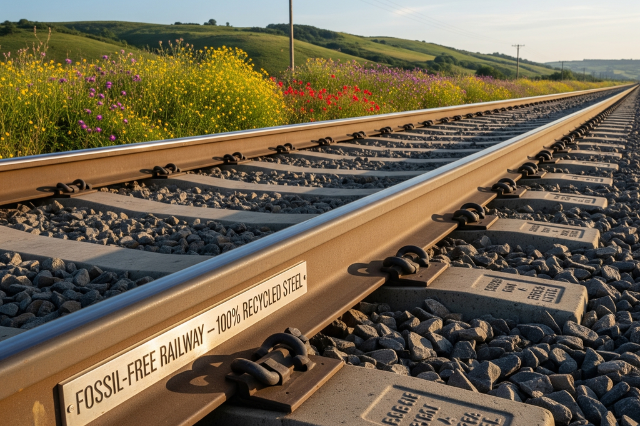
For the first time, a railway track was laid that was produced entirely without fossil fuels and made from 100% recycled materials. Rails might seem mundane, yet this one demonstrates that sustainable infrastructure is already becoming a reality.
If my research is correct, the project began in March 2022. That’s when voestalpine, a global steel and technology group based in Austria, launched its greentec steel program.
The goal was ambitious: to decarbonise steel production by replacing coal with green hydrogen. Green hydrogen is hydrogen produced using renewable energy sources, so it generates no carbon emissions. Steelmaking is notoriously carbon-intensive, so this shift represents a significant step toward achieving climate neutrality.
What’s particularly impressive is that voestalpine didn’t just talk about change—they partnered with ÖBB, Austria’s national railway company, and made it happen.
Fast forward to July 29, 2025, and the first fossil-free rail was ceremonially laid at Linz Central Station. It was produced using hydrogen-based steelmaking and crafted entirely from recycled materials. That means no fossil fuels were burned in its creation, and no new raw materials were extracted. It’s a perfect example of circular economy principles in action—reusing what we already have, minimising waste, and reducing emissions at every step.
Reading about this, I couldn’t help but feel a sense of hope.
We often hear about the challenges of transitioning to a low-carbon economy, and rightly so—it’s complex, costly, and requires systemic change. But here’s a tangible example of that transition underway. This rail isn’t just a piece of infrastructure; it’s a symbol of what’s possible when industries commit to sustainability and governments support innovation.
What makes this even more impactful is its integration into a broader infrastructure upgrade. The rail is part of the four-track expansion between Linz and Wels, a project designed to increase capacity for both passenger and freight trains. Not only is the rail itself sustainable, but it also contributes to a more efficient and climate-friendly transport system overall. Austria is clearly positioning itself as a leader in green mobility, and this project sends a strong signal to the rest of Europe—and the world.
As someone who closely follows climate tech and sustainable design, I find stories like this incredibly energising. They remind me that progress doesn’t always come in sweeping, dramatic gestures.
Sometimes, it’s a single rail laid in Linz. That rail represents years of research, collaboration, and a shared vision for a better future, proving even heavy industry can be reimagined for the planet.
In a time when climate headlines often feel heavy, this one felt light. Not because the work is done, but because it’s clearly begun—and this rail is solid proof that large-scale change is possible. If we can make a rail without fossil fuels, what else can we reinvent?
Should you spot any errors in my writing, don’t hesitate to reach out; I’ll gladly fix them.